ARTÍCULO EN VIVO – ACTUALIZADO PERIÓDICAMENTE. Meta está implementando los nombres de usuario por fases a lo largo de 2026. Actualizamos esta página cada vez que se confirma oficialmente nueva información. Última actualización: marzo de 2026.
Meta está implementando los nombres de usuario de WhatsApp a lo largo de 2026. Este artículo explica qué significa eso para sus sistemas, sus clientes y qué debe hacer
TL;DR: explicación de los nombres de usuario de WhatsApp
Léalo si dispone de 60 segundos. Vuelva al artículo completo cuando esté listo para actuar.
- Meta está introduciendo nombres de usuario de WhatsApp. Los clientes podrán ocultar sus números de teléfono al enviar mensajes a empresas.
- Cuando eso ocurra, tendrá que usar un nuevo identificador llamado Business-Scoped User IDs (BSUID) en lugar de números de teléfono.
- Para una transición más sencilla y la interoperabilidad entre BSUID y números de teléfono, Meta también lanzará una función llamada Contact Book. Asigna automáticamente los números de teléfono de los clientes a los BSUID a partir de eventos de conversación incluso antes de que empiece la adopción de nombres de usuario, de modo que la mayor parte de su base ya queda protegida automáticamente.
- El periodo de abril a junio será una ventana de pruebas en vivo y adopción. Los BSUID serán visibles en los webhooks, los Contact Books irán creando asignaciones, pero la adopción de nombres de usuario aún no comenzará. Use este tiempo para entender el cambio, no para construir a la desesperada.
- Nada se rompe hasta que comience la adopción de nombres de usuario en junio de 2026 y, aun así, solo para conversaciones completamente nuevas de usuarios que hayan adoptado nombres de usuario.
- 360Dialog proporcionará especificaciones completas, ejemplos y soporte de implementación a medida que avance el despliegue. No tendrá que resolverlo solo.
- Los números de teléfono no van a desaparecer. Los clientes existentes y la mensajería saliente a números conocidos no se ven afectados.
Qué está cambiando realmente con los nombres de usuario de WhatsApp y por qué
Durante años, WhatsApp ha funcionado con un principio simple: su número de teléfono es su identidad. Cada cuenta, cada conversación y cada interacción con empresas ha estado vinculada a un número.
Eso está a punto de cambiar por diseño, y por una buena razón.
La investigación de Meta mostró que el control sobre la información personal es una de las principales preocupaciones de los usuarios al usar WhatsApp. Muchas personas no quieren compartir su número de teléfono con cada empresa a la que escriben. Los nombres de usuario les dan esa opción.
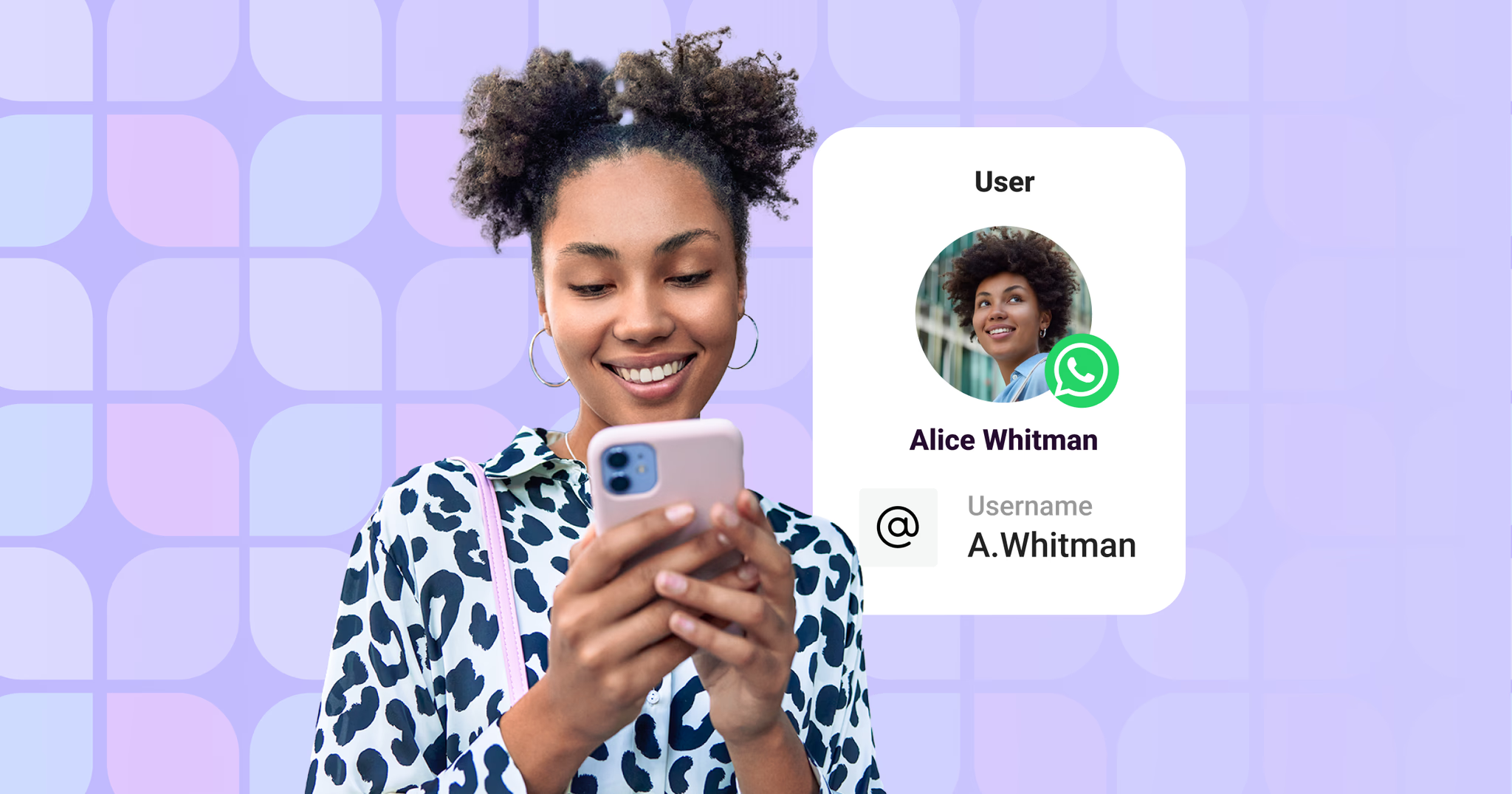
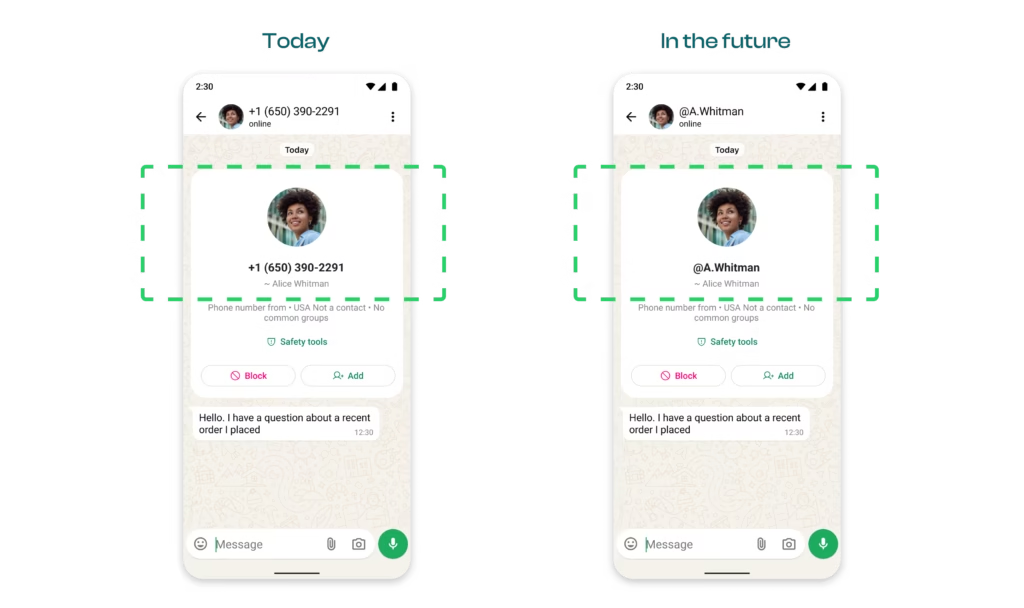
A partir de mediados de 2026, los usuarios podrán elegir un nombre de usuario (un alias como @AliceWhitman) y usarlo para enviar mensajes a empresas sin revelar su número de teléfono. Es opcional. La adopción será gradual. Y la plataforma se ha diseñado con un periodo de transición específicamente para que las empresas puedan adaptarse sin interrupciones.
En la práctica, esto significa que su sistema empezará a recibir un Business-Scoped User ID (BSUID) junto con los números de teléfono y, más adelante, solo BSUID cuando el usuario en cuestión adopte un nombre de usuario. Esta guía existe para ayudarle a entender los cambios y cómo se irán implementando.
Dos cosas que debe entender primero
Antes de entrar en los plazos y qué actualizar, hay dos conceptos que deben quedar claros. Todo lo demás se basa en ellos.
1. Los nombres de usuario no son lo mismo que los nombres para mostrar
Este es el punto de confusión más común, así que dejémoslo claro.
Su nombre para mostrar es el nombre de la empresa que sus clientes ven dentro del chat de WhatsApp. Está vinculado a su perfil de empresa y a su número de teléfono. Esto no va a cambiar.
Los nombres de usuario son diferentes. Para los usuarios habituales de WhatsApp, son alias buscables, un nuevo punto de entrada que les permite encontrar e iniciar conversaciones con sus amigos y con empresas sin necesitar un número de teléfono. Piense en ello como un @alias en Instagram o Telegram.
Un punto importante a aclarar: las empresas no podrán dirigirse a los usuarios mediante nombres de usuario. La mensajería empresarial seguirá funcionando mediante identificadores de la plataforma (números de teléfono y BSUID). Lo que cambia es cómo se inician las conversaciones y qué identificador llega cuando lo hacen.
2. ¿Qué es un BSUID y por qué importa?
La forma más sencilla de pensarlo es esta: WhatsApp se está alejando de “número de teléfono = identidad”.
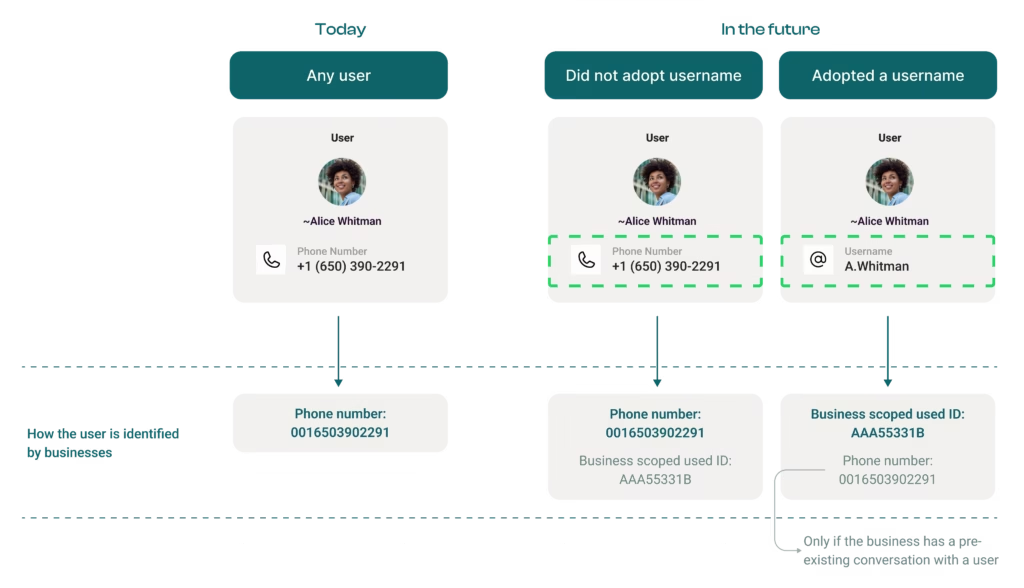
Cuando un usuario adopta un nombre de usuario, su número de teléfono deja de compartirse automáticamente con las empresas. WhatsApp envía en su lugar un Business-Scoped User ID (BSUID), un identificador único que representa a ese usuario específicamente en el contexto de su cartera de empresas.
Tres cosas que debe saber sobre los BSUID:
- Son únicos. Ningún par de usuarios comparte el mismo BSUID.
- Están acotados a su cartera de empresas. El mismo cliente tiene un BSUID diferente con cada empresa con la que interactúa. Esto es intencional: mantiene la identidad estable dentro de sus conversaciones sin exponer una clave universal.
- Aparecerán en todos los webhooks a partir del 31 de marzo, independientemente de si un usuario ha adoptado un nombre de usuario. Esto le da tiempo para verlos, probar su análisis y entender cómo se ven en cargas útiles reales de webhooks antes de que nada dependa realmente de ellos.
Cómo funciona la transición a nombres de usuario
Esta es la parte que más importa para entender su exposición real y por qué el calendario es más permisivo de lo que puede parecer.
Abril – junio de 2026: la ventana de adopción
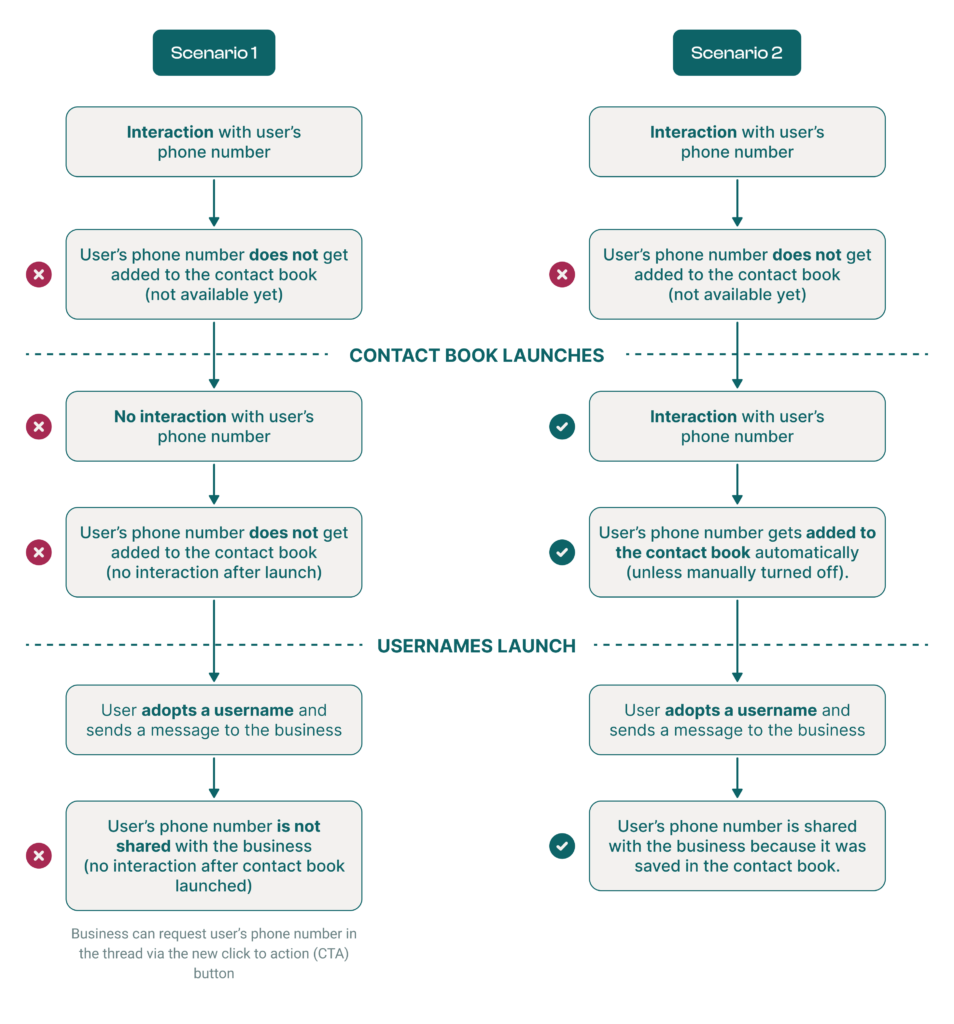
Cuando Contact Book se lance en abril, empezará de inmediato a hacer algo valioso: almacena automáticamente la asignación entre los números de teléfono de sus clientes y sus BSUID cada vez que interactúa con ellos.
Esto ocurre en segundo plano, de forma predeterminada, para todas las empresas. No necesita desarrollar nada para que funcione.
Durante el periodo de abril a junio, los nombres de usuario no estarán disponibles para que los usuarios los reclamen. Esto significa que los BSUID pasarán a ser visibles en sus webhooks para todos los eventos de mensajes, los Contact Books irán creando asignaciones, pero los clientes seguirán identificándose por números de teléfono en sus flujos existentes. En la práctica, no cambia nada en su mensajería durante este periodo.
Esta ventana existe para que pueda observar los BSUID en datos reales de webhooks, entender cómo se ven y empezar a planificar su implementación a su propio ritmo, con ejemplos reales con los que trabajar.
En la práctica, esto significa: incluso si no implementa ningún manejo de BSUID durante abril y mayo, su Contact Book ya habrá estado creando asignaciones para todos sus clientes existentes. Cuando implemente (ya sea en mayo, junio o más adelante), tendrá una base sólida de identificadores ya asignados esperándole.
A partir de junio de 2026: cuando comienza la adopción de nombres de usuario
Aquí es cuando los nombres de usuario pasan a estar disponibles para los usuarios en países de prueba y, gradualmente, se expanden a nivel global. A medida que los usuarios adoptan nombres de usuario, sus números de teléfono dejan de compartirse automáticamente con las empresas a las que escriben.
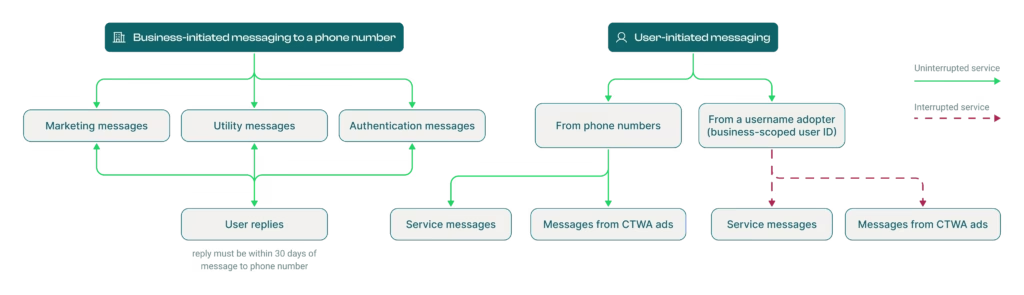
En este punto, dos flujos se romperán para los usuarios que hayan adoptado un nombre de usuario si su sistema no está gestionando BSUID:
- Mensajes de anuncios click-to-WhatsApp (CTWA)
- Mensajes de servicio entrantes
El matiz clave: la adopción de nombres de usuario será gradual. En el lanzamiento, afectará a una pequeña fracción de su tráfico entrante. Para los clientes existentes cuyos números de teléfono ya estén en su Contact Book, la continuidad se preserva automáticamente.
Lo que no cambia
Es igual de importante saber qué se mantiene igual, independientemente de la adopción de nombres de usuario:
- Los mensajes de autenticación seguirán enviándose solo a números de teléfono, como hoy.
- Los clientes que no hayan adoptado un nombre de usuario seguirán siendo alcanzables mediante números de teléfono. También seguirá recibiendo su número de teléfono en los eventos de webhook con normalidad.
- La mensajería saliente a números de teléfono con los que interactuó durante el periodo de adopción sigue funcionando: puede seguir enviando mensajes de marketing, utilitarios y de autenticación a números conocidos, gracias a Contact Book.
Contact Book: su red de seguridad para la transición
Contact Book es la función que hace que esta transición sea manejable y está habilitada de forma predeterminada para todas las empresas.
A partir de abril de 2026, cada vez que envíe o reciba un mensaje con el número de teléfono de un cliente, WhatsApp almacena automáticamente en su Contact Book la asignación entre ese número de teléfono y su BSUID. No requiere ninguna acción por su parte.
Qué significa esto en la práctica: si un cliente adopta más adelante un nombre de usuario, usted seguirá pudiendo contactar con él usando su número de teléfono, ya que Contact Book tendrá su número de teléfono asignado a su BSUID en segundo plano. Sus relaciones con clientes existentes quedan protegidas automáticamente.
Lo único que debe tener en cuenta: para que esto funcione, debe mantener Contact Book habilitado. Está activado por defecto y recomendamos dejarlo así. Puede gestionar este ajuste en Business Manager a partir del 16 de marzo de 2026, aunque no empezará a recopilar datos hasta que los webhooks se enriquezcan con el BSUID el 31 de marzo de 2026.
Qué hacer y cuándo
No existe una única fecha límite para todos. El momento adecuado depende de su configuración y de cuánto tráfico espere de nuevos usuarios que adopten nombres de usuario en el lanzamiento.
Así es como debe pensarlo:
Si quiere adelantarse
A partir del 31 de marzo, los BSUID aparecerán en respuestas de webhooks en vivo. Este es el momento ideal para:
- Leer el campo user_id en sus respuestas de webhook y registrar los valores; no hace falta actuar sobre ellos todavía, solo observar
- Añadir BSUID como campo en los perfiles de sus clientes junto al número de teléfono
- Empezar a asignar BSUID a registros existentes para que su CRM esté listo cuando comience la adopción de nombres de usuario
- Actualizar los flujos del chatbot para solicitar el número de teléfono mediante el nuevo botón CTA nativo, en los flujos de trabajo que dependan de ello
Si aún no está listo para implementar
No pasa nada. Contact Book ya está protegiendo su base de clientes existente de forma predeterminada. No se está perdiendo nada crítico durante la ventana de adopción de abril a junio.
360Dialog publicará especificaciones completas de implementación, ejemplos reales de webhooks y guías paso a paso a medida que avance el despliegue. No necesita implementar hoy contra cargas útiles hipotéticas. Nos aseguraremos de que tenga todo lo que necesita —con datos reales con los que trabajar— antes de que realmente importe para sus flujos.
Nuestro compromiso: estamos entre usted y la complejidad de este despliegue para que no tenga que estarlo. Proporcionaremos documentación, ejemplos y soporte en cada etapa. Siga esta página para ver las actualizaciones a medida que se confirmen.
Una nota para empresas que gestionan múltiples carteras
Los BSUID están acotados a una cartera de empresas, no son globales. El mismo cliente tendrá un BSUID diferente en cada cartera con la que interactúe.
Si gestiona varios clientes en distintas carteras, esto afecta al mapeo de identidad a escala. La solución son los BSUID principales (parent BSUIDs), un identificador compartido entre carteras vinculadas bajo una cuenta empresarial principal. Póngase en contacto con su POC de Meta para configurarlo si aplica a su caso.
Calendario de despliegue
Basado en las comunicaciones oficiales de Meta a partners y en las sesiones informativas directas de 360Dialog.
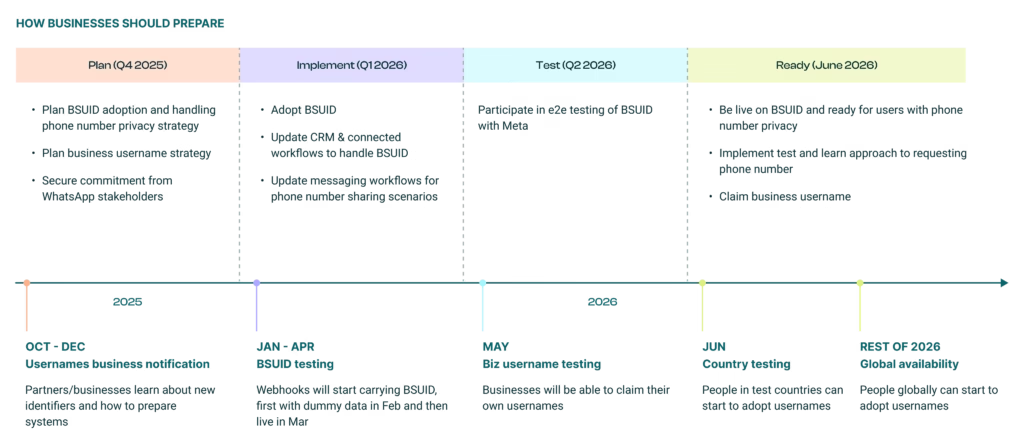
- 16 de febrero de 2026 – BSUID visible en webhooks de prueba a través del panel de Meta. Empiece a familiarizarse con el formato.
- 16 de marzo de 2026 – El ajuste de Contact Book se puede gestionar en Business Manager. Manténgalo habilitado.
- 31 de marzo de 2026 – Los BSUID aparecen en todas las respuestas de webhooks en vivo. Se abre la ventana de pruebas. Use este periodo para observar, registrar y planificar.
- Abril de 2026 – Contact Book empieza a registrar automáticamente las asignaciones de número de teléfono a BSUID. Su base de clientes existente comienza a construir su red de seguridad.
- Mayo de 2026 – Soporte de la WhatsApp Business API para enviar mensajes mediante BSUID (pendiente de confirmación final por parte de Meta).
- Junio de 2026 – Comienzan las pruebas de nombres de usuario por país. Los primeros usuarios empiezan a adoptar nombres de usuario en países de prueba.
- Resto de 2026 – Despliegue global. La adopción de nombres de usuario se amplía tanto para usuarios como para empresas.
Sí. Si ya tiene su número de teléfono de una conversación anterior, puede seguir enviándole mensajes independientemente de si ha adoptado un nombre de usuario. Contact Book preserva esta continuidad automáticamente almacenando la asignación de número de teléfono a BSUID de todas las interacciones previas.
Los nombres de usuario son opcionales para los usuarios finales: nadie está obligado a adoptar uno. Para los partners que usan la plataforma de WhatsApp Business, deberá actualizar sus sistemas para gestionar BSUID, pero dispone de un periodo de transición real para hacerlo, con 360Dialog proporcionando especificaciones y soporte a medida que avance el despliegue.
Dos flujos pueden romperse para los usuarios que hayan adoptado un nombre de usuario: mensajes de anuncios CTWA y mensajes de servicio entrantes. Esto solo aplica una vez que comience la adopción de nombres de usuario en junio de 2026 y, en el lanzamiento, la adopción será gradual. Para los clientes existentes cuyos números de teléfono estén en su Contact Book, la continuidad se preserva automáticamente.
El BSUID es un identificador único que WhatsApp asigna a cada usuario, acotado a su cartera de empresas. Cuando un usuario adopta un nombre de usuario y deja de compartir su número de teléfono, el BSUID es lo que recibe su sistema en su lugar. Si no lo gestiona, no podrá identificar ni responder a esos usuarios.
En general, no. Manténgalo habilitado en Business Manager; puede gestionar este ajuste a partir del 16 de marzo de 2026. Mientras esté activo, creará automáticamente la asignación de número de teléfono a BSUID a partir de todas las interacciones existentes con sus clientes. No se requiere ninguna configuración adicional.
Las conversaciones iniciadas por CTWA de usuarios que hayan adoptado un nombre de usuario requerirán que su sistema gestione un BSUID en lugar de un número de teléfono. Esto empieza a ser relevante a partir de junio de 2026, cuando comience la adopción de nombres de usuario. 360Dialog proporcionará orientación específica de implementación para este escenario a medida que se acerque el despliegue.
Empiece por añadir un campo BSUID a los perfiles de sus clientes y actualizar el análisis de sus webhooks para leer el campo user_id. No elimine los números de teléfono: necesitará ambos. 360Dialog publicará guías paso a paso de integración del CRM con ejemplos reales de cargas útiles durante la ventana de pruebas.
La respuesta práctica: antes de que la adopción de nombres de usuario sea significativa en sus mercados. En junio de 2026 comenzarán las pruebas a nivel de país, y la adopción será gradual a partir de ahí. El periodo de abril a junio está diseñado específicamente para permitir la implementación sin interrupciones. 360Dialog le mantendrá informado de lo que ocurre en cada mercado a medida que avance el despliegue.
Sí. Los BSUID tienen un alcance por cartera empresarial, por lo que el mismo cliente aparecerá con un BSUID diferente en cada cartera. Si necesita un identificador compartido entre carteras vinculadas, Meta ofrece una solución de BSUID principal; póngase en contacto con su POC de Meta.
Sí. Las empresas que utilizan la Plataforma de WhatsApp Business están exentas de las claves de nombre de usuario: su BSUID o número de teléfono existente ya demuestra una conexión establecida y omite automáticamente el requisito de la clave.